
What It Means to Certify a Machine-Learning Model
An accuracy figure is a claim. Certification is the evidence behind it: how we check that a model earned its score honestly, and why we would rather say 'not assessed' than guess.
Tested, real model use on real data: safe, certifiable, repeatable and auditable predictive AI — every number shown, every limitation stated.
An accuracy figure is a claim. Certification is the evidence behind it: how we check that a model earned its score honestly, and why we would rather say 'not assessed' than guess.
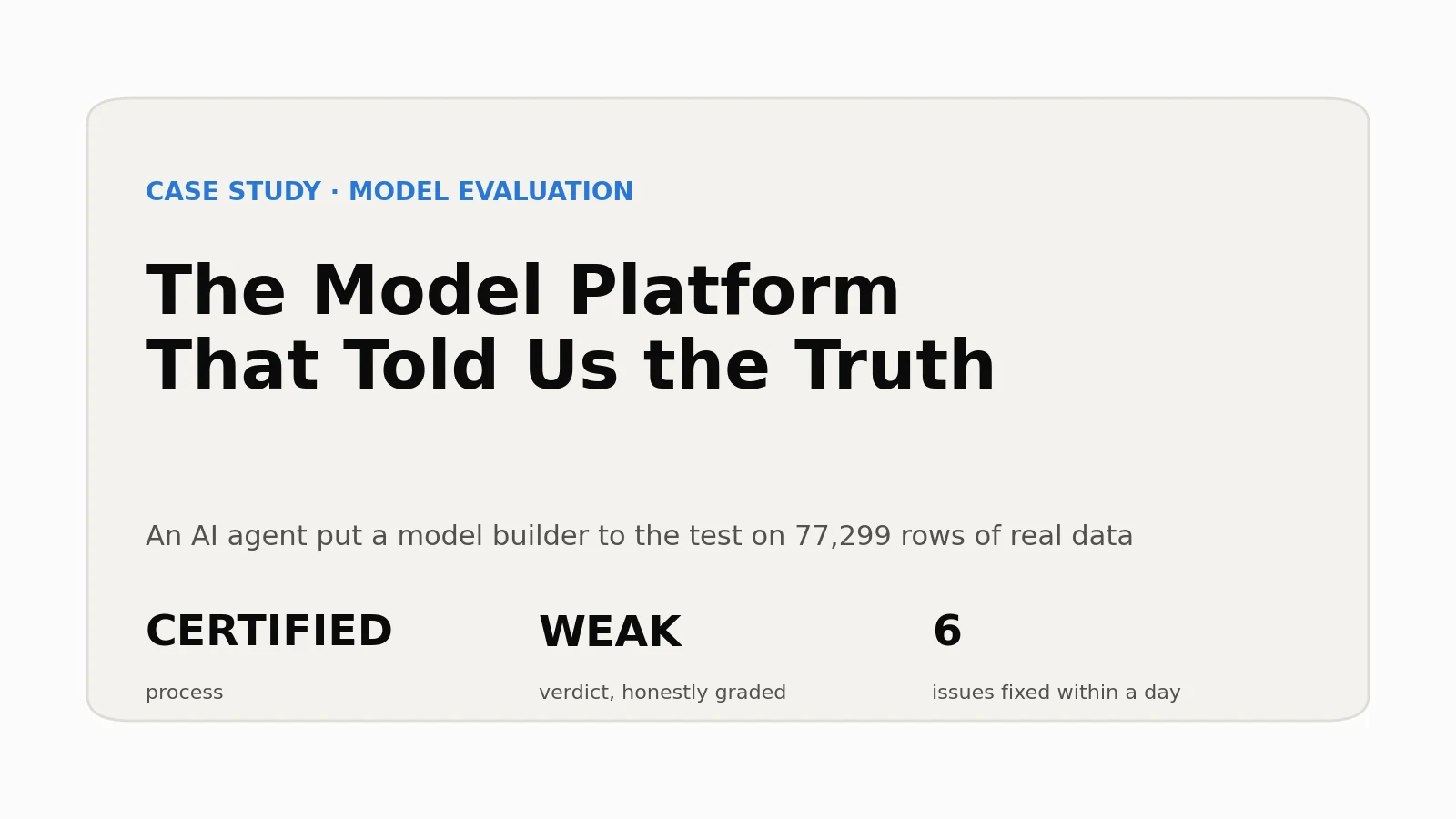
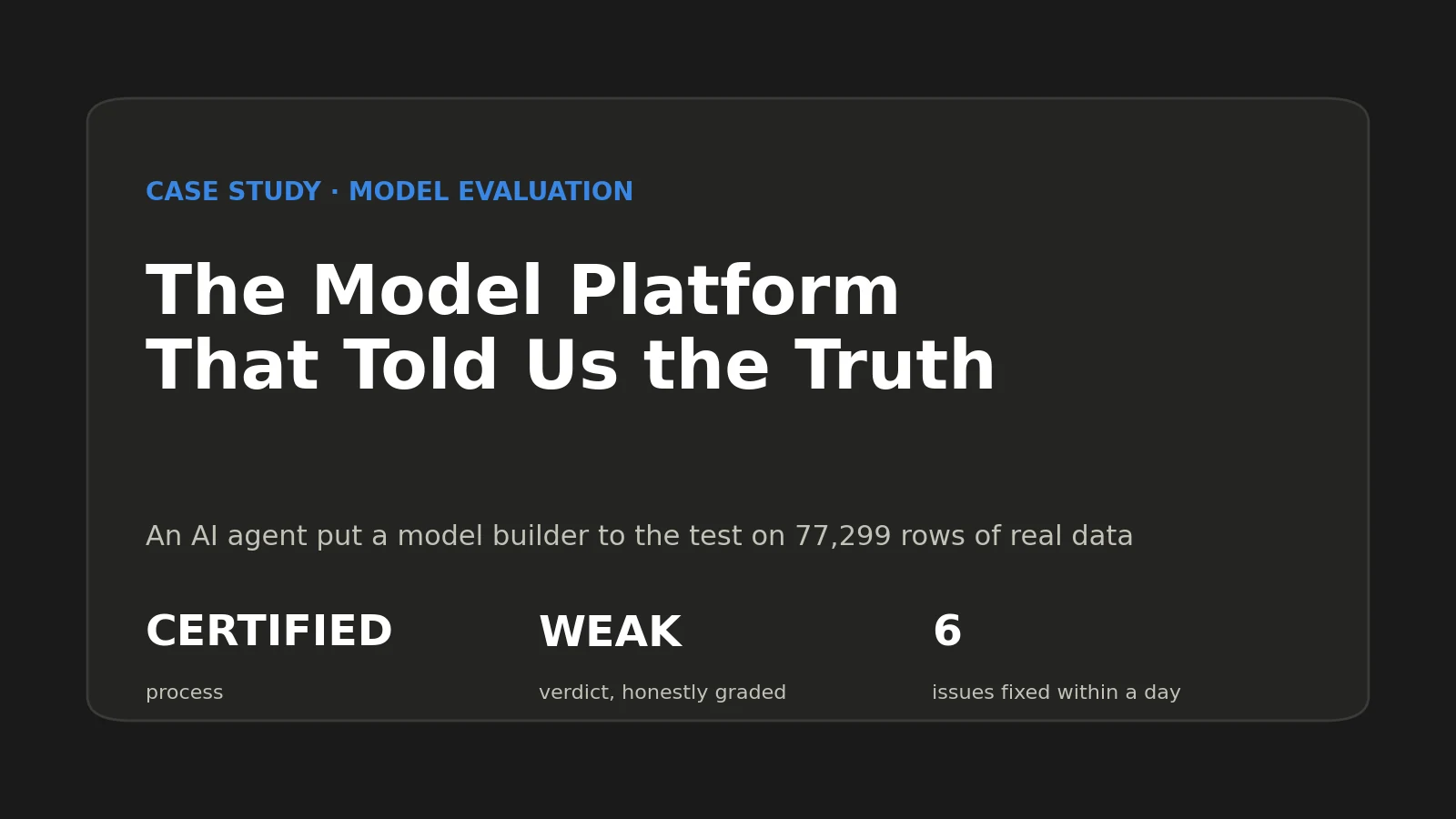
An AI agent put YourCloudGroup Model Manager to the test on 77,299 rows of real data. The platform caught six mistakes that would have flattered the result, certified the process, and graded the signal honestly as weak.

Blind-set trials on three public datasets, converted into dollars: which machines to inspect, which customers to keep, which prospects to call — and when a seat pays for itself at $499 a month or $4,788 a year.

Yes — if the platform it drives checks the agent's work. What an AI agent can safely automate in predictive modeling, what it must not decide alone, and the API features that make it possible.

Held-out evaluation tests a predictive model on data it never saw during training. Here is how it works, why in-sample accuracy flatters, and a worked example on 28,306 transactions.

Predictive models turn rows of structured data into a class or a number and can be measured on held-out data. Generative models turn prompts into new text. Here is when each one fits.

Yes — if the CSV has one row per case, a target column with known past outcomes, and enough examples. Here is what your file needs, what to remove, and how the process works.
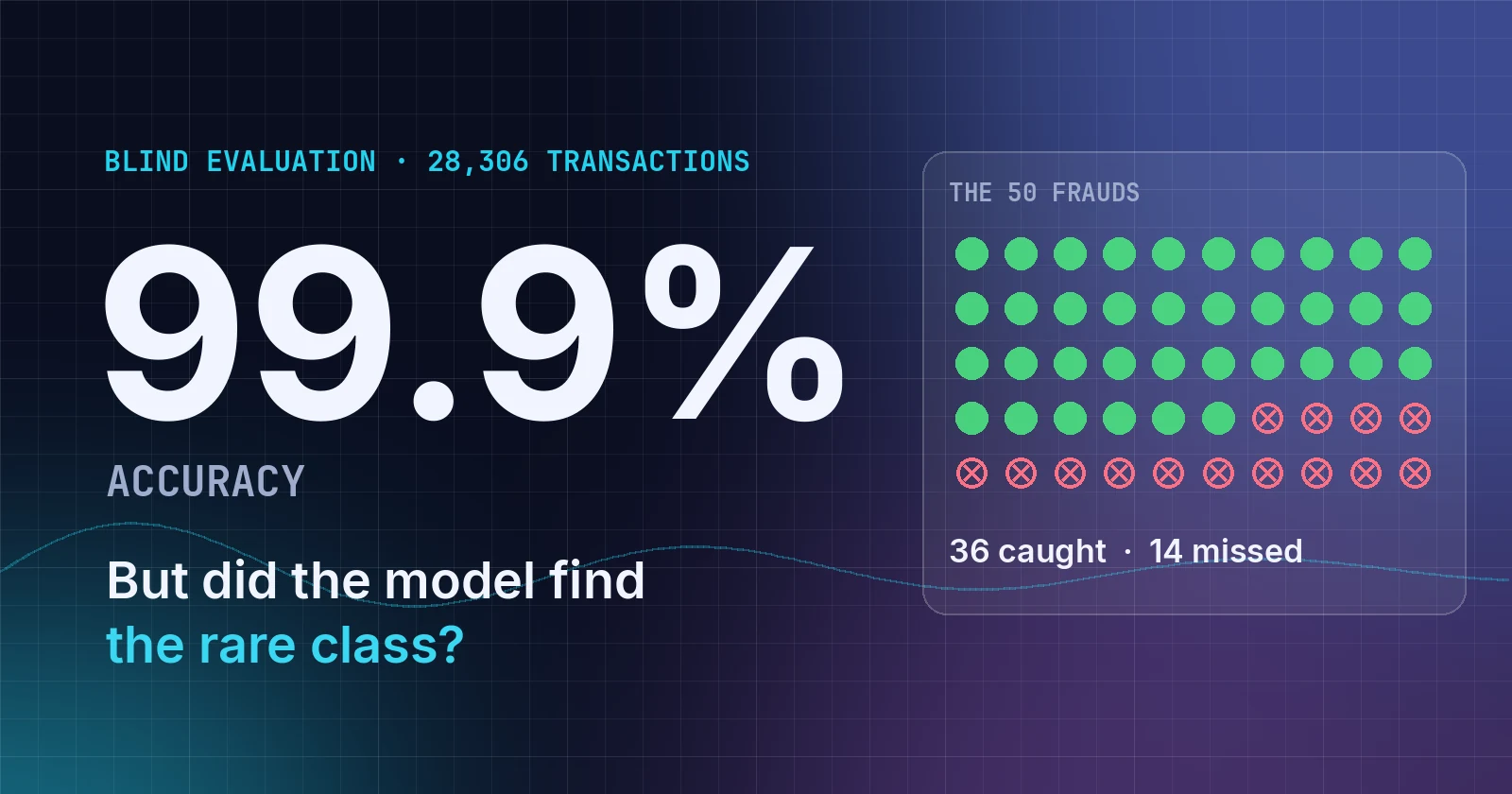
A real fraud-classification experiment scored 99.9% accuracy on 28,306 held-out transactions, yet missed 14 of 50 frauds. Here is why accuracy alone misleads on imbalanced data.